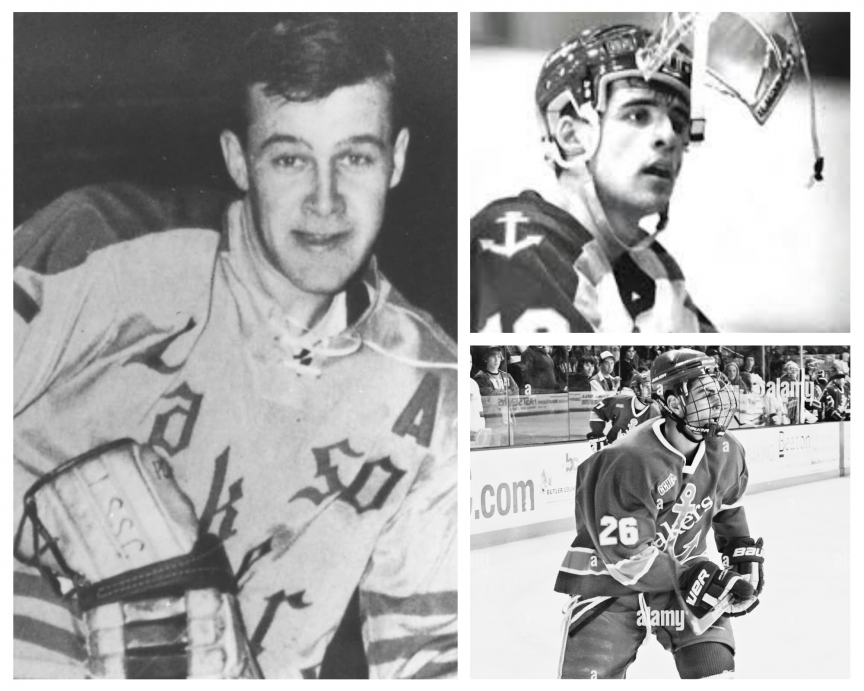
In 1966, Laker Hockey didn’t have banners, traditions, or a legacy — it had a beginning. In 2026, as Lake Superior State celebrates six decades of Division I hockey, the program stands as a reflection of the players who built it, shaped it, and sustained it. From the pioneers who created the culture, to championship teams who elevated it, to modern-day Lakers who carry it forward, each generation has left its mark on a story that continues to grow.
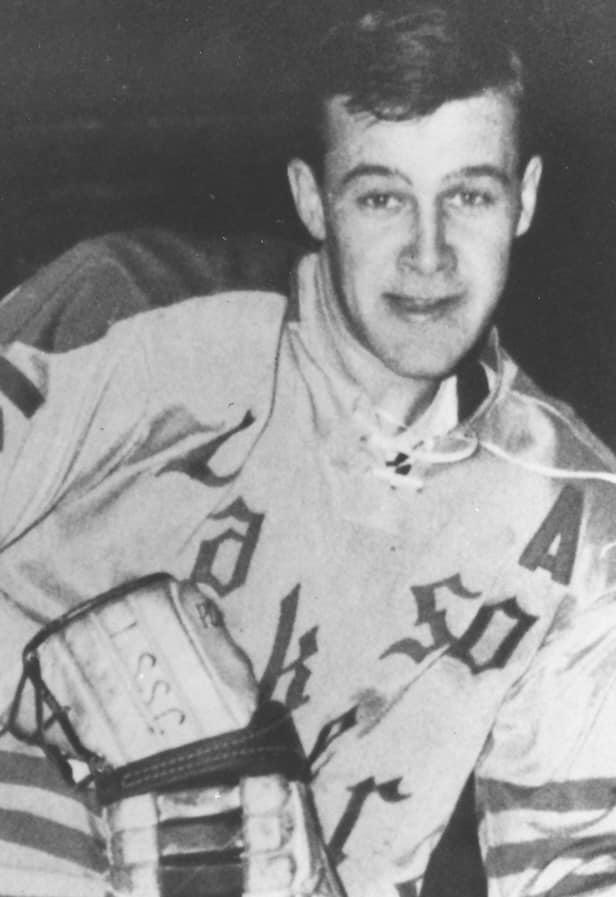
Jim Booth
Jim Booth, a member of Lake Superior State’s first recruiting class and a 1970 graduate, remembers a time when Laker Hockey didn’t have a tradition — it had to build one.
“There was no culture,” Booth said. “We created it.”
Booth was the program’s first hockey scholarship recipient in 1966 and one of only two players who skated in the Lakers’ first-ever game and stayed all four years. From the beginning, he said, the mindset was clear.
“We had a winning attitude from day one,” he said. “That carried us through those first four years.”
The early success was immediate. The Lakers advanced to the national championship game three consecutive seasons, helping establish the foundation of a program that would grow into a national contender.
Back then, everything about Laker Hockey was new.
“No one had ever seen a Laker jersey,” Booth said. “We were the first to wear it, and we were proud to show it off.”
The game itself looked much different, too. Players wore tube skates, leather gloves, and used wooden sticks. Home games were played at Pullar Stadium, where amenities were minimal.
“We didn’t even have showers in the dressing room,” Booth recalled. “We had to run down the hallway with towels wrapped around us to get to a washroom with two showers—and plenty of fans watching us make the trip.”
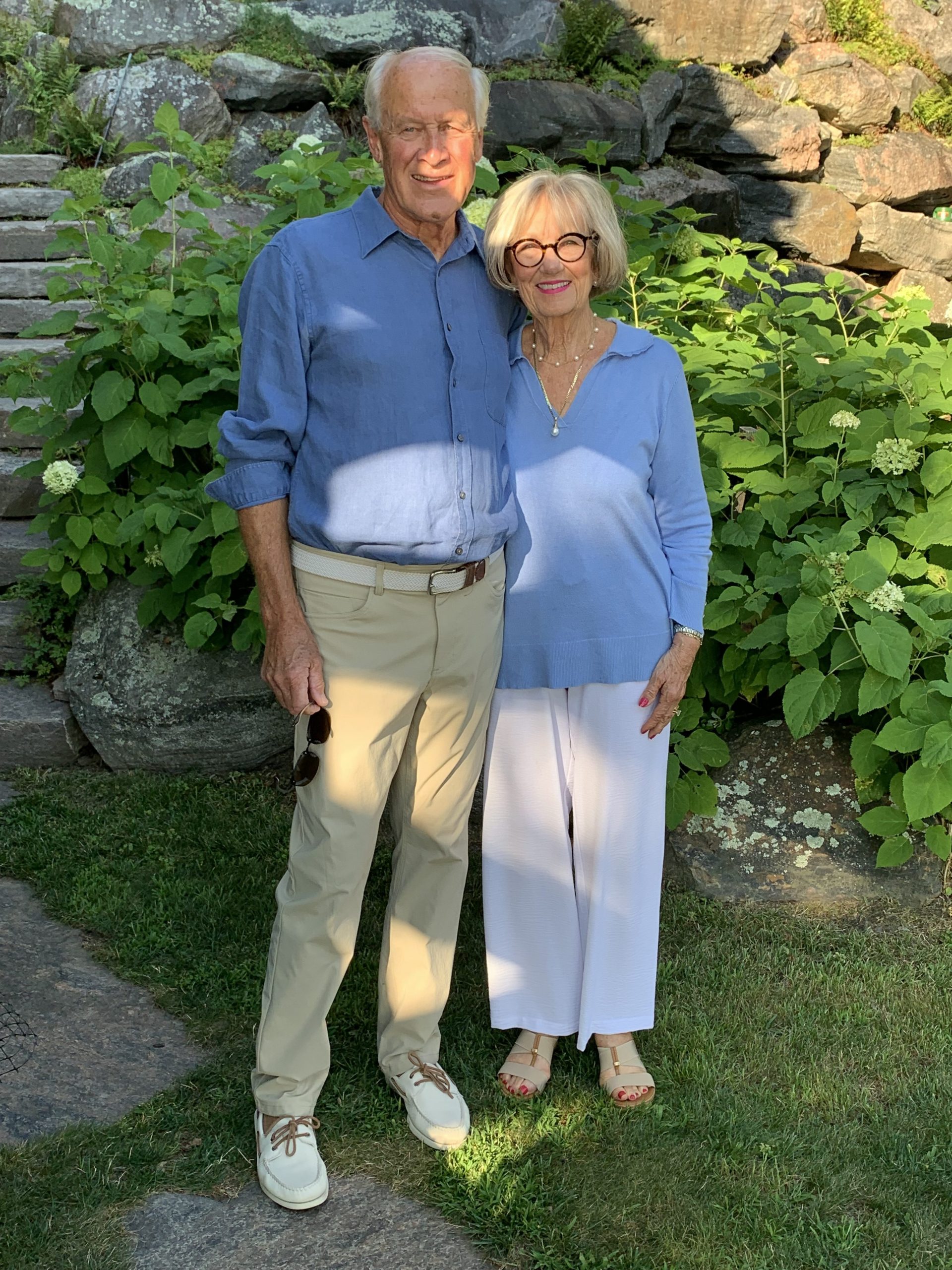
Jim and Lynda Booth
Before arriving at LSSU, Booth had been drafted by the Boston Bruins and skated alongside Bobby Orr, but a series of unexpected turns led him to Sault Ste. Marie to play for legendary coach Ron Mason—a decision that became part of program history.
Six decades later, Booth says the evolution of the game is almost impossible to put into words. But one thing hasn’t changed: the impact of the experience.
“It feels like just yesterday I was playing at LSSU,” he said. “You don’t know what tomorrow will bring, so cherish your time. These will be some of the most special memories of your life.”
Doug Laprade
Doug Laprade, a 1991 graduate and member of Lake Superior State’s 1988 NCAA Division I National Championship team, remembers a program built not just on success — but on connection.
“Obviously, we had a lot of success on the ice,” Laprade said. “There are great memories from games and practices. But honestly, my best memories weren’t on the ice — they were in the dorms with my teammates.”
From Brady Hall to the Village and the townhouses, Laprade says those everyday moments shaped the team just as much as anything that happened during a game.
“If you ask any of the guys, that’s what they’ll remember most,” he said. “Living together, being around each other all the time — that’s what made it special.”
For Laprade and his teammates, Laker Hockey wasn’t just something they did — it defined how they lived.
“It was more than a culture — it was a lifestyle,” he said. “We loved being around each other. There weren’t any bad apples. Maybe a few small groups here and there, but everyone got along. That bond meant everything.”
That connection carried onto the ice, but so did a deep sense of pride in representing something bigger.
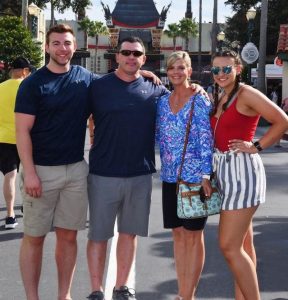
Ryan, Doug, Pam and Kristen Laprade
“Wearing the Laker anchor was an unbelievable feeling,” Laprade said. “You knew you were playing for more than just the school — you were playing for the whole town. I still remember the first time I put it on, and the last time I had to take it off.”
Looking at today’s game, Laprade sees a clear evolution. The modern college athlete is more specialized, more prepared, and part of a more advanced system.
“When we played, things were simpler,” he said. “We had a modest locker room, ate together in the dining hall, lived on campus — always with a roommate. Now, players come in with more experience, more training, and everything is more professional.”
Still, the core of what makes a team successful hasn’t changed.
“If I could tell current and future Lakers one thing, it would be to enjoy your four years,” he said. “It goes by faster than you think. Take it all in, spend time with each other, and build those relationships — because that’s how you win.”
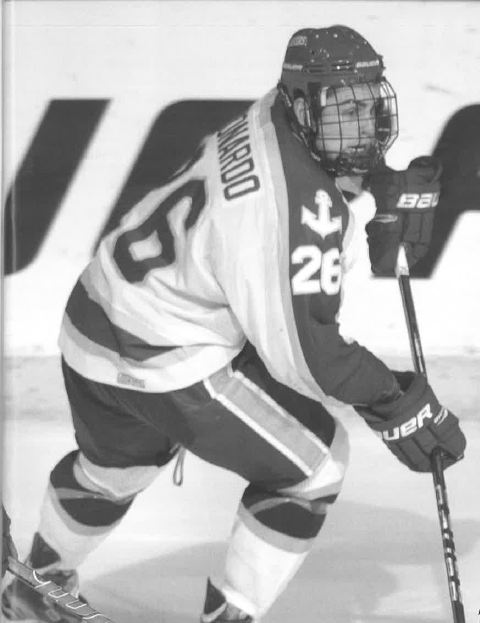
Domenic Monardo
Domenic Monardo, a 2013 graduate of Lake Superior State, has a story built on perseverance, pride, and a deep appreciation for what it means to be part of Laker Hockey.
For Monardo, some of his strongest memories trace back to one of the program’s most cherished traditions — ringing the victory bell after a home win. It’s a moment every player envisions, and for him, it carried a meaning that went far beyond the ice.
“Growing up, one of my biggest dreams was to play Division I hockey,” he reflects. “That journey came with its share of challenges, but I was fortunate to have an incredible support system—my family and those close to me — who helped me push through and reach that goal.”
That support made every milestone more meaningful. With his family in the stands at Taffy Abel Arena, Monardo wasn’t just living out his dream — he was sharing it.
“Those moments were made even more special by the pride and appreciation I felt running out of the dressing room to ring the bell, knowing they were right there to share in it with me.”
From the day he arrived on campus, Monardo quickly understood what being a Laker demanded. The culture was clear: accountability, hard work, and pride in everything you do.
“On the ice, there was a strong emphasis on competing every shift and playing for one another,” he says. “Seeing the National Championship banners hanging in Taffy Abel Arena was a constant reminder that we were part of something bigger than ourselves—we were playing to uphold a standard and make past, present, and future Lakers proud.”
That sense of responsibility extended well beyond game day. Off the ice, the expectations were just as high.
“The culture was rooted in respect and representing the program the right way in the community,” Monardo explains. “Even if we didn’t always have the biggest crowds, it was obvious how much Laker Hockey meant to the people around us, and that was something we carried with us every day.”
Wearing the Laker jersey was never something he took lightly.
“It meant a lot — it represented the history of the program and all the players who came before us. It was an honor to contribute to that legacy.”

Jenna, Antonio, Vienna and Domenic Monardo
As his career moved into professional hockey, taking him to new levels and destinations, Monardo gained an even deeper appreciation for his time in Sault Ste. Marie.
“Without question, some of the most meaningful and memorable moments of my entire career came during my time as a Laker,” he says.
While the game continues to evolve with more speed and skill, he believes the foundation of Laker Hockey remains unchanged — rooted in work ethic, teamwork, and pride.
His advice to the next generation of Lakers is simple, but powerful:
“Embrace every moment and don’t take the experience for granted. The time goes by quickly, and the relationships you build will last far beyond your playing days. Put in the work, represent the program with pride, and enjoy being part of something bigger than yourself.”
GO LAKERS GO!
As Laker Hockey celebrates 60 years, the voices of Booth, Laprade, and Monardo echo a common thread — while the game, facilities, and eras have changed, the heart of the program has not. Built on hard work, pride, and connection, the legacy continues to grow with each new generation of Lakers who step onto the ice, adding their chapter to a story that began in 1966 and is still being written today.