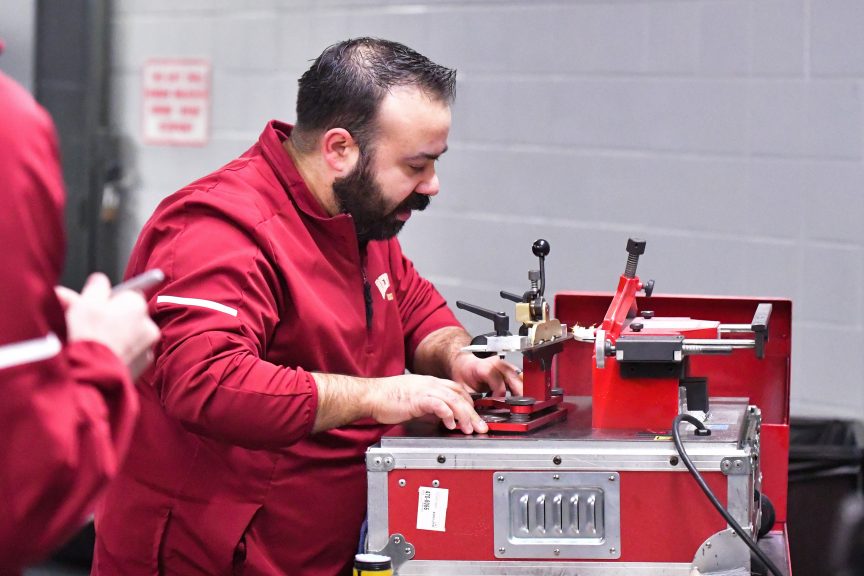
Nick Meldrum ’07 is the Director of Equipment Room Operations for the University of Denver Hockey program and a longtime staff member with USA Hockey’s National Junior Team. A 2007 graduate of Lake Superior State University, Nick’s career began as a student manager with Laker Hockey, where he developed a passion for the behind-the-scenes work that keeps teams running at the highest level. With nearly two decades of experience, including three NCAA National Championships and multiple IIHF World Junior medals, Nick has built a reputation for reliability, dedication, and a deep love for the game. His journey reflects the power of mentorship, hard work, and seizing opportunities at every level of the sport.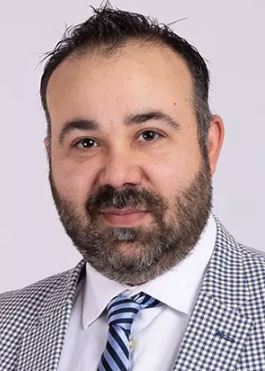
First off, tell us a little bit about yourself and how you got to where you are professionally as the Director of Equipment Room Operations with the University of Denver, as well as with the U.S. National Junior Team?
My name is Nick Meldrum, and I am a 2007 graduate of Lake State, and I hold a Bachelor’s of Science Degree in Marketing and Management. During my time in the Soo, I was a student manager with the hockey team where I gained a lot of great experience working alongside former Equipment Manager and Athletic Trainer Rick Mick, former Head Coach Jim Roque and Assistant Coach Tim Christian as well as learning from retired Laker Equipment Managers Roy Forrest and Gil Somes who were locker room regulars and were always showing me some of their old school tricks of the trade that I still use today. After graduation, I was fortunate enough to land a job to continue honing my skills working as an Equipment Manager at USA Hockey’s National Team Development Program with Former Laker Assistant Coach Ron Rolston and Former Laker Sports Information Director Scott Monaghan. I spent two seasons at the National Team Development Program working with the under-17 and under-18 teams and was lucky enough to be a part of a silver medal at the 2007 World Under-17 Hockey Challenge as well as the gold medal winning staff at the 2009 IIHF U18 World Championship. During my time with USA Hockey, I was able to meet college coaches who came to recruit players from the NTDP, and found out after the U18 World Championship that the University of Denver was going to have an Equipment Manager opening, and I decided that I would really like to get back to college hockey.
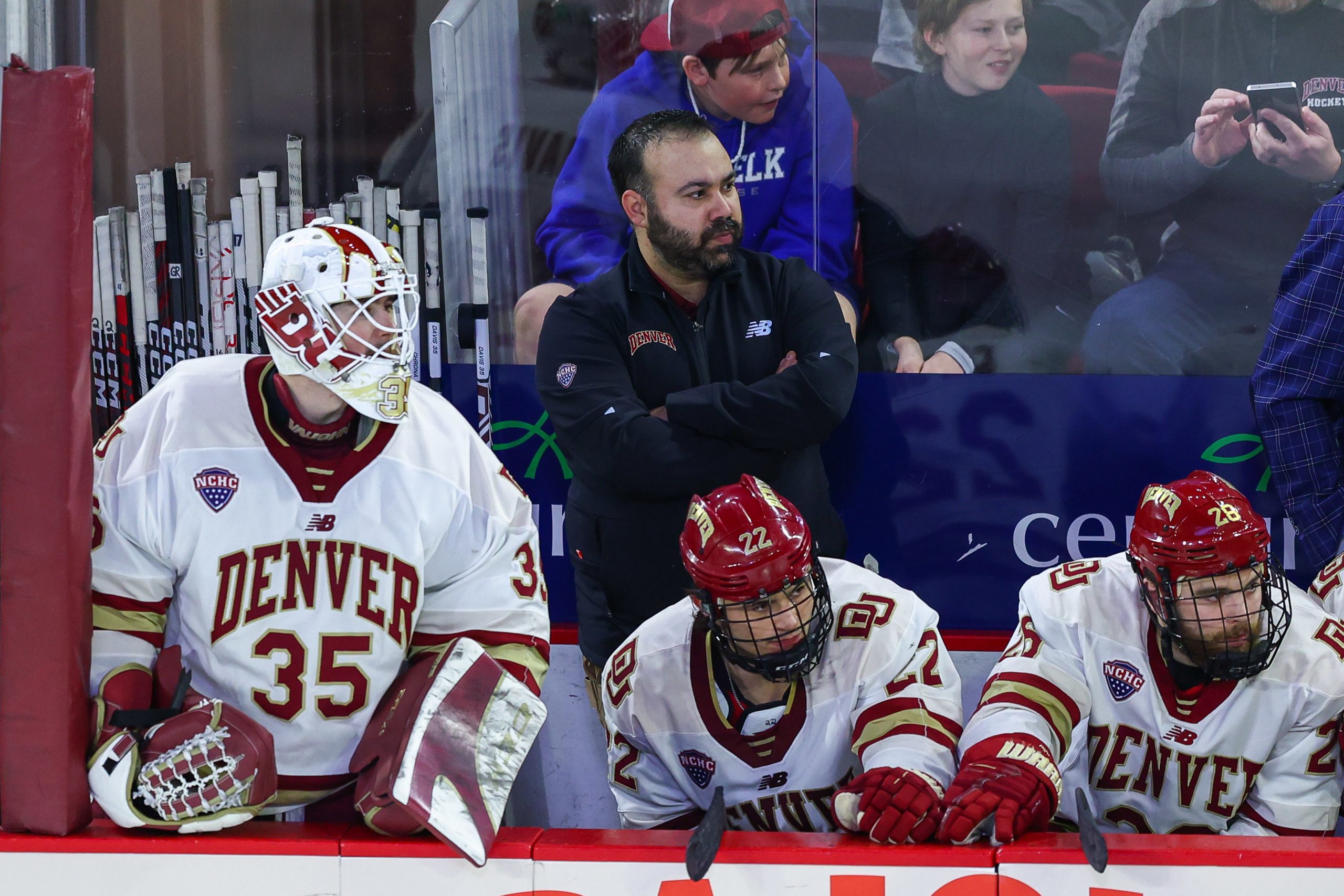
13 JAN 2022: The Denver Pioneers men’s ice hockey team takes on the Miami Red Hawks at Magness Arena held at the University of Denver in Denver, CO. (Harrison Barden/Clarkson Creative Photography)
It’s hard to believe, but I am in my 17th year at Denver where I am responsible for the purchase, distribution, maintenance, and repair of all equipment for Pioneer Hockey players and staff. I have again been incredibly fortunate to be a part of three NCAA National Championships, (2017, 2022, 2024). Additionally, I’ve been able to help USA Hockey to a silver-medal finish at the 2019 IIHF World Junior Championship in British Columbia, and gold medals at the 2024 IIHF World Junior Championships in Sweden, as well as the 2025 World Junior tournament in Ottawa, Ontario. It really has been a dream come true.
What originally brought you to Lake Superior State University?
I was always a Laker Hockey fan growing up. I thought the jerseys were awesome. But what put me over the top was when I was working for Laker Hockey Alum Danny Angelelli and his father Ray at Mancini Racing all through high school and college breaks. Danny and his dad always spoke so highly of his time and experience at Lake State, it made me want to be a part of a place like that. Plus, I like that it was a small University in the U.P. At that time, I wanted to be a Mechanical Engineer, and I really liked how the small class sizes and hands-on approach the School of Engineering and Technology had right from your start in the program. I love the UP, and I also love hunting, fishing, and snowmobiling, but I also wanted a school that had Division 1 hockey, so Lake State was the perfect fit.
What led you to pursue a career in hockey operations?
During my time as a student manager, I really enjoyed the job. I had decided to switch majors from Mechanical Engineering to Management and Marketing due to the auto industry not doing so well at the time, and kind of thought, “this hockey job is pretty fun, I want to take a shot at making this my full-time career”. I really enjoyed being in the locker room and working with the staff and players. I liked working with my hands and problem solving and just being around the game in general. I knew I was entering a niche career, but I wanted to see what I could make of it and I honestly couldn’t have imagined hockey taking my family and I as many places as it has.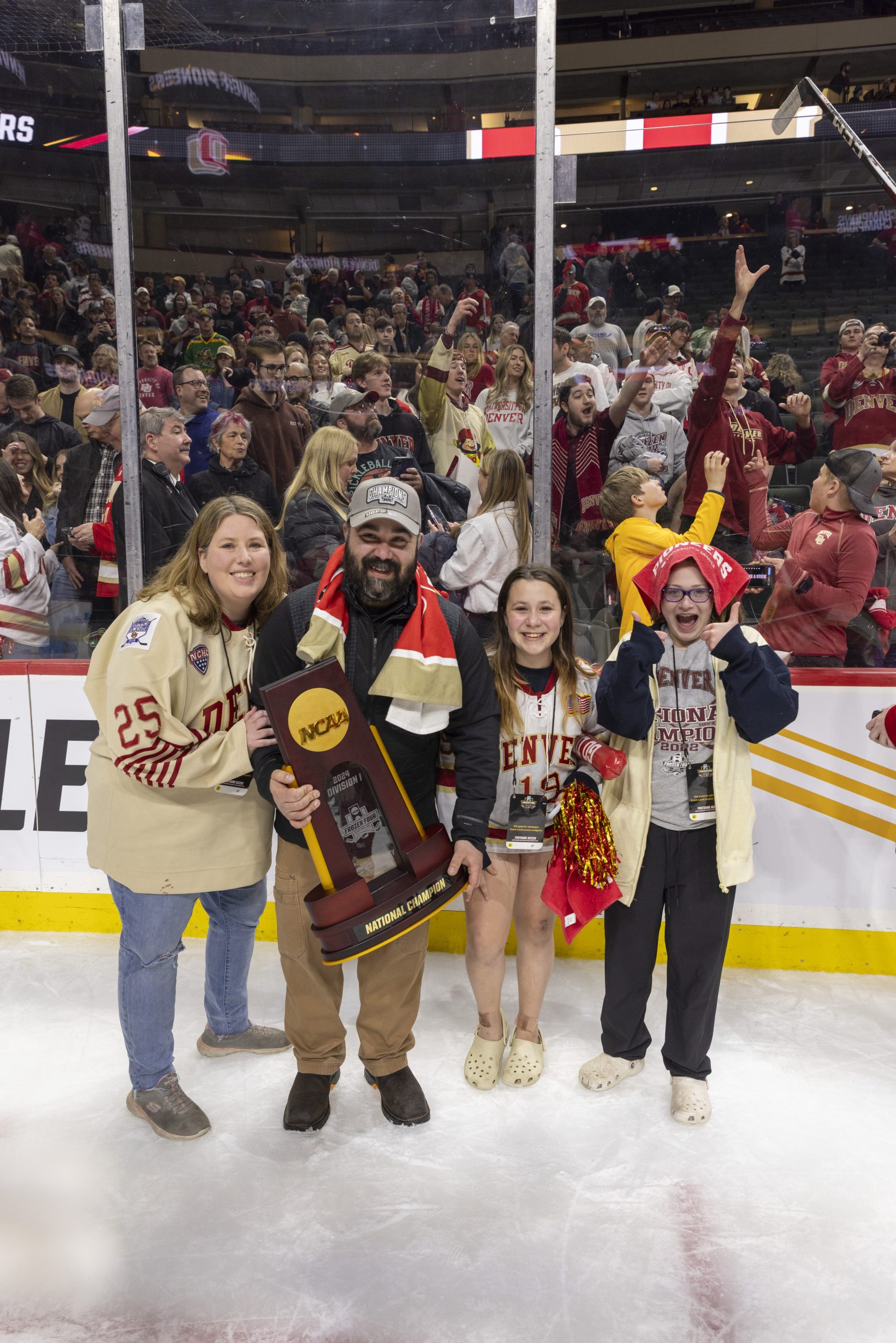
How did your experience at Lake Superior State University shape your career path?
Plain and simple, the people there are phenomenal. I remember when I sat down with former Equipment Manager and Athletic Trainer Rick Mick and discussed with him how I wanted to pursue a career as an Equipment Manager. I told him that I wanted to learn anything and everything that he would be willing to show me, and he was always willing to spend the time teaching and explaining things to me and would keep increasing my responsibilities. After I spoke with Rick, I talked with retired Laker Equipment Managers Roy Forrest and Gil Somes about my desire to become an Equipment Manager, and they took me under their wing as well to teach me their old school tricks of the trade that I still use today. Rick also put me in touch with Detroit Red Wings Head Equipment Manager and former Laker Student Manager Paul Boyer, who has always been willing to give me advice along the way. With all these people there was never any hesitation in helping me. I always felt like part of the team and part of the family and they wanted me to succeed.
Were there any specific courses or professors at Lake Superior State University that influenced you significantly?
It’s easy to talk about the people involved with the hockey program at the time and how much they helped me, but there were classes and professors that impacted me and still help me out with what I learned in them. Some of my favorite classes when I was in the Engineering program were Engineering Materials, Mechanics of Materials, and Manufacturing Processes, all taught by Keith Schwiderson at the time. I really enjoyed Keth’s classes. I still use things I learned in those classes regularly, such as failure modes of materials and plastic forming processes. Plastics and composites are a major part of hockey equipment and understanding the different kinds of stresses, and strains and how they impact the materials as well as how they are made/formed, helps when I need to do repairs on equipment as well.
I also use a lot of classes from when I changed over to the Business School. My Accounting classes are used regularly as I am keeping track of budget spending, cost allocations, and budget proposals among other things. I also really liked Collective Bargaining. I use some of the negotiation tactics from that class when dealing with contract renewals with our equipment providers. As far as Professors that had an impact on me in the Business School, Val Phillips, J. Robert Field, Brian Zinser, Ann Marinoni, and Linda Schmitigal were all professors who helped me a ton. I enjoyed their classes and learned a lot from them.
Did you participate in any extracurricular activities or clubs that helped develop your skills for your current role?
I was a member of Tau Kappa Epsilon. I think being involved with the chapter responsibilities and committees, I learned how to manage projects, how to communicate effectively with many different personalities, and problem solve. The fraternity pushed me to grow both personally and professionally, whether that was stepping up to lead as an officer of the Fraternity, helping organize events, or learning how to work with others toward a common goal, like fundraising and executing our annual Tub Push or recruiting new members during Rush.
How has your background and experience prepared you for the unique demands of managing your current positions with both the University of Denver and Team USA?
I’ve been really fortunate to gain experience in two different, but very demanding environments with Denver and Team USA. At Denver, I’ve learned a lot about what it takes to keep a high-level program running smoothly day in and day out. It’s really helped me develop good habits around being organized, staying ahead of things, adapting quickly to change, being available, and supporting the team however I can.
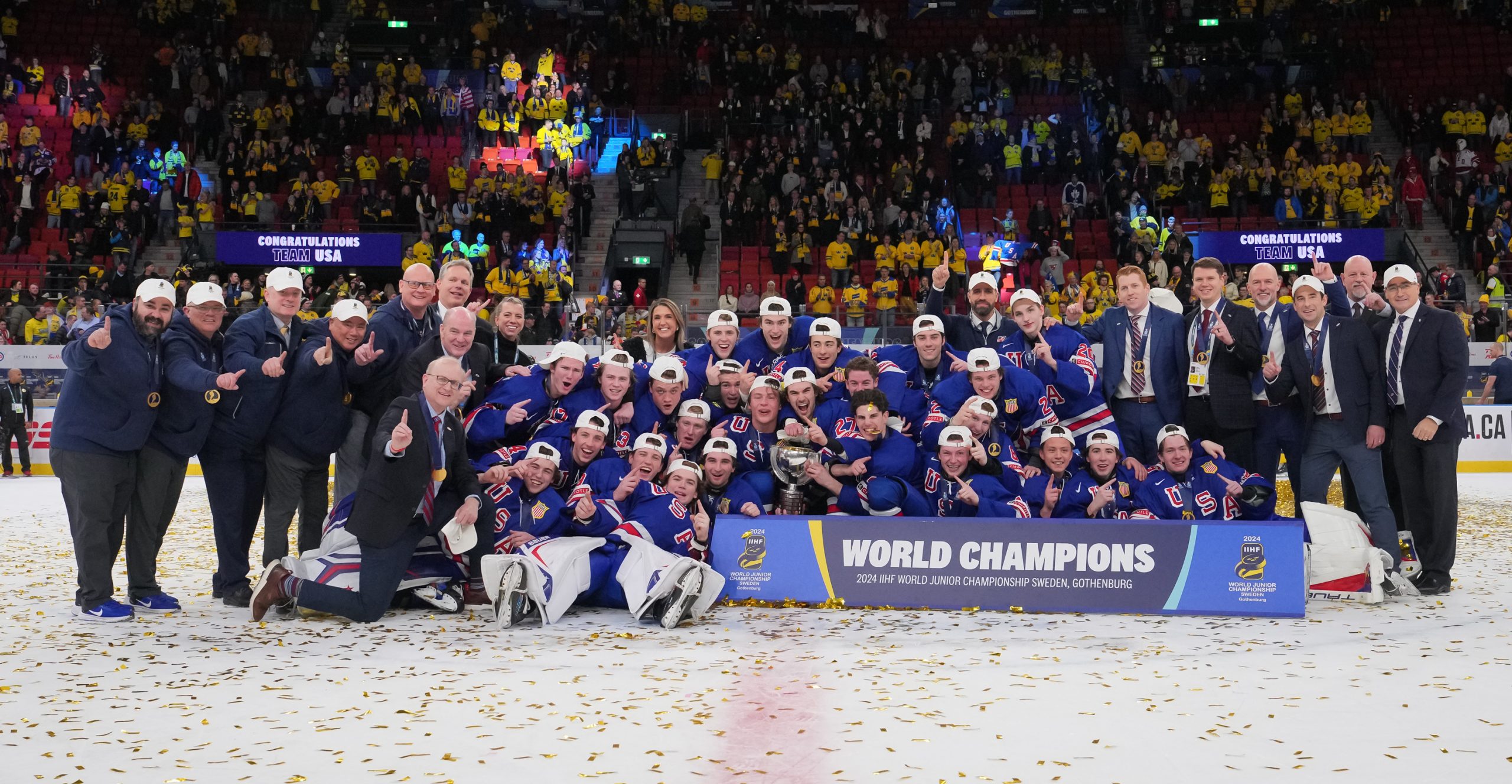
GOTHENBURG, SWEDEN – JANUARY 5: Team USA pose for a group photo with the championship trophy after a 6-2 gold medal game win against Team Sweden at the 2024 IIHF World Junior Championship at Scandinavium on January 5, 2024 in Gothenburg, Sweden. (Photo by Matt Zambonin/IIHF)
Those experiences translate well into my involvement with Team USA. The team is only together for short periods of time, so things move fast and there’s not a lot of time to settle in. When you are together for the Evaluation and Selection Camp before the Tournament, you’ve got to hit the ground running and be flexible. You have to build trust with the players and staff quickly by making sure they have everything that they need to perform. It’s a lot of pressure, these players have dreamed of having the opportunity to play for their country in the World Junior Championship, and we have to make sure they are ready to perform at a high level and manage the things behind the scenes and make sure things run as smoothly as possible so they can focus on fulfilling their dream. I definitely don’t take either opportunity for granted. I just try to show up every day, do my job well, and be someone any team or staff member can count on.
I wouldn’t say I have it all figured out by any means, but the experiences that I’ve had have helped prepare me to handle the different demands of both roles. I’m always learning along the way.
Can you share any memorable experiences or challenges you’ve faced in your role as the Director of Equipment Room Operations?
Probably the most memorable challenge was COVID. It was difficult to get everything that we needed, and things were constantly changing and changing fast. Certain orders took 10-12+ weeks depending on where they were coming from. We went from not playing, to playing the first half in a bubble. Then in the second half, we traveled like normal and then back to a bubble scenario for payoffs.it was such a difficult time to get through. We were constantly testing and if guys were positive, they were out for an extended period in quarantine. It was hard to plan for practices and games because all it took was one positive test and it could impact an entire house or dorm room for quarantine. When you’re trying to plan and stay ahead of everything, it was nearly impossible to think of every scenario that could impact the team. That was a miserable year plus.
There are many memorable experiences in my 17 years here at Denver, but the most memorable would be being a part of six Frozen Fours, three national championships and two World Junior Gold Medals. Each championship is special for certain reasons, and each trip to the Frozen Four has been special as well. But my first championship experience in 2017 in Chicago was amazing. My mom, brother, nephew, and mother-in-law drove from the Detroit area to be there. When we beat Duluth and were celebrating on the ice, our captain and Hobey Baker winner Will Butcher handed me the trophy, and I turned around to look up at the crowd and saw my whole family waving and jumping up and down. It was surreal.
Were there any memorable moments or experiences from your time as a student that still impact you today?
My most memorable moment as a student manager was probably when we went to Miami for the CCHA Playoffs and swept them to go to the conference finals at Joe Louis Arena. Miami had a very good team, and not many people gave us a chance, but we were able to weather their storm Saturday night and win back-to-back 2-1 games to head to the Joe for the first time in a while.
What do you enjoy most about your job with the University of Denver and Team USA, and how does it align with your passions?
I love the game of hockey. I’ve met so many great people on my journey, and that’s probably what I enjoy most. Whether its staff that moves on or meeting the players as freshmen and watching them grow into adults and having success with their careers in hockey or in the real world, and starting families of their own is awesome. It’s also great to see the parents of former players still coming to our games in Denver, or wherever we may be on the road and catching up with them hearing their stories.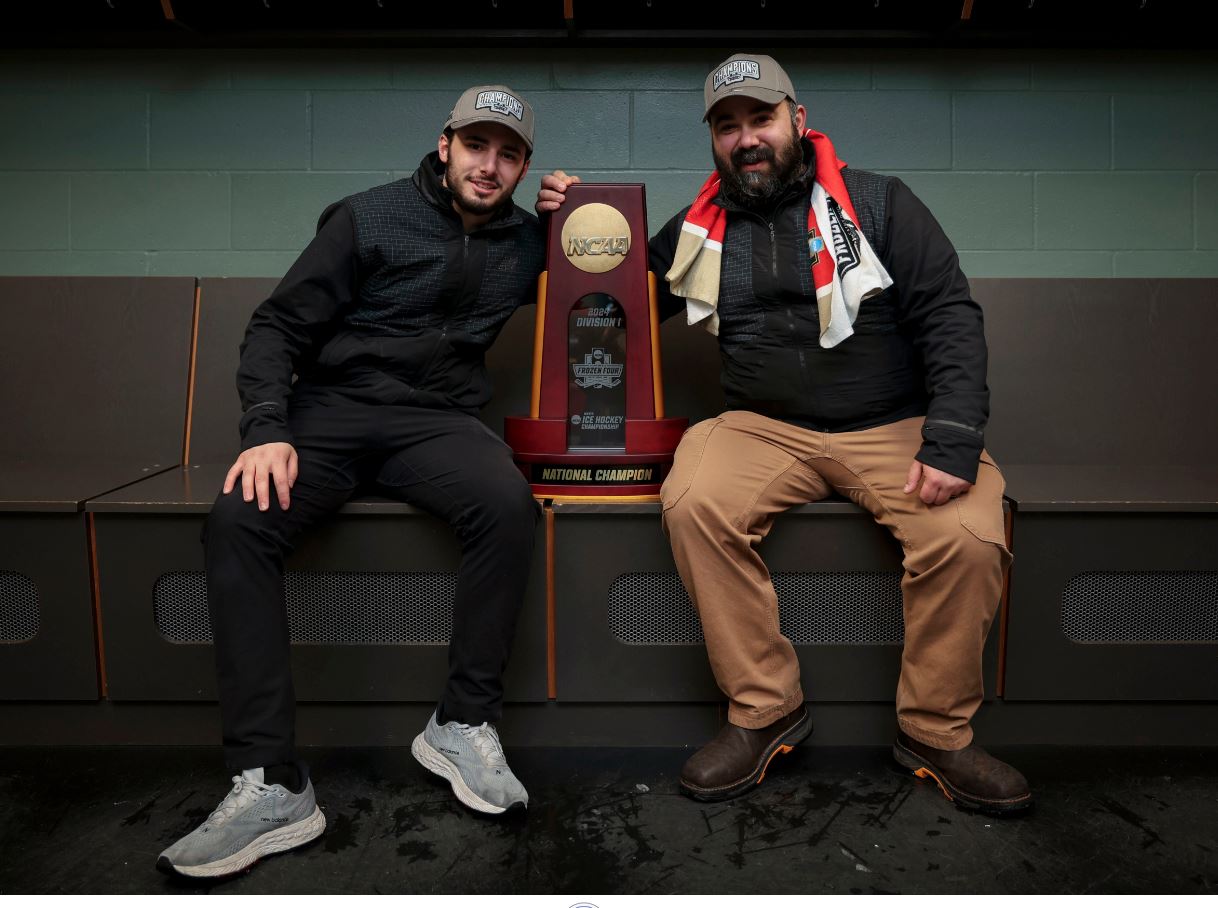
How did you navigate the transition from an equipment manager at the college level to working with a national team like Team USA? What were some of the biggest differences?
Honestly, it’s not too difficult. There aren’t that many differences. You are dealing with the same age group of players, and we know a lot of the players from playing against them. Like I said earlier, the biggest difference is how quickly everything happens because you are only together for short periods of time. I try to talk to the players’ equipment managers to get a feel for how they are and what they like, then you just try to connect with them. I like to try to keep things light and make them laugh to help them feel comfortable around me.
What are the most critical qualities for someone in your position to have, and how do you work to develop those traits in yourself?
I think the most important qualities for a hockey equipment manager are being reliable, attention to detail, being organized, and the ability to stay calm under pressure. The players and coaches must know that they can count on you, whether it is making sure the gear is ready, handling travel logistics, or dealing with last minute issues that may arise before or during a game. You have got to be dialed in and always on your toes ready to react. Being organized and detail oriented is huge also. There are so many moving parts on a day-to-day basis, small mistakes can set you or your player back unintentionally. In this profession, you are never done learning, so a mistake today is a lesson learned for tomorrow.
Communication and trust go a long way as well. Having strong relationships with your players and staff helps make things run smoothly. And honestly, it all comes down to having a strong work ethic and being willing to go the extra mile for the players and staff. It’s not always a glamorous job, especially when you’re hanging wet equipment and doing laundry late at night towards the end of the season. But I love the game and take immense pride in supporting our team and staff, and that’s what makes the job really rewarding at the end of the day.
What advice would you give to someone aspiring to become involved in a college hockey league or on a national level in the area of equipment management? Specifically, what advice would you give to current LSSU students aspiring to pursue a career in hockey operations?
Relationships are a big part of hockey. Send the email asking if you can help or be a part of the program in some capacity. It may be a volunteer student manager, work study, or grad assistant type role to start, but get involved and make a connection. Don’t be afraid to start small and build your confidence and skill set. If you do get the chance, take every opportunity you get to learn, whether it’s sharpening skates, setting up for practice and games, loading the bus, folding towels, helping the coaches, or repairing equipment. Don’t be afraid to ask questions or take initiative along the way, your effort will be noticed. Just make sure you work hard and care about doing things the right way and opportunities will come.